
AI4OS
Artificial Intelligence For Operational Security
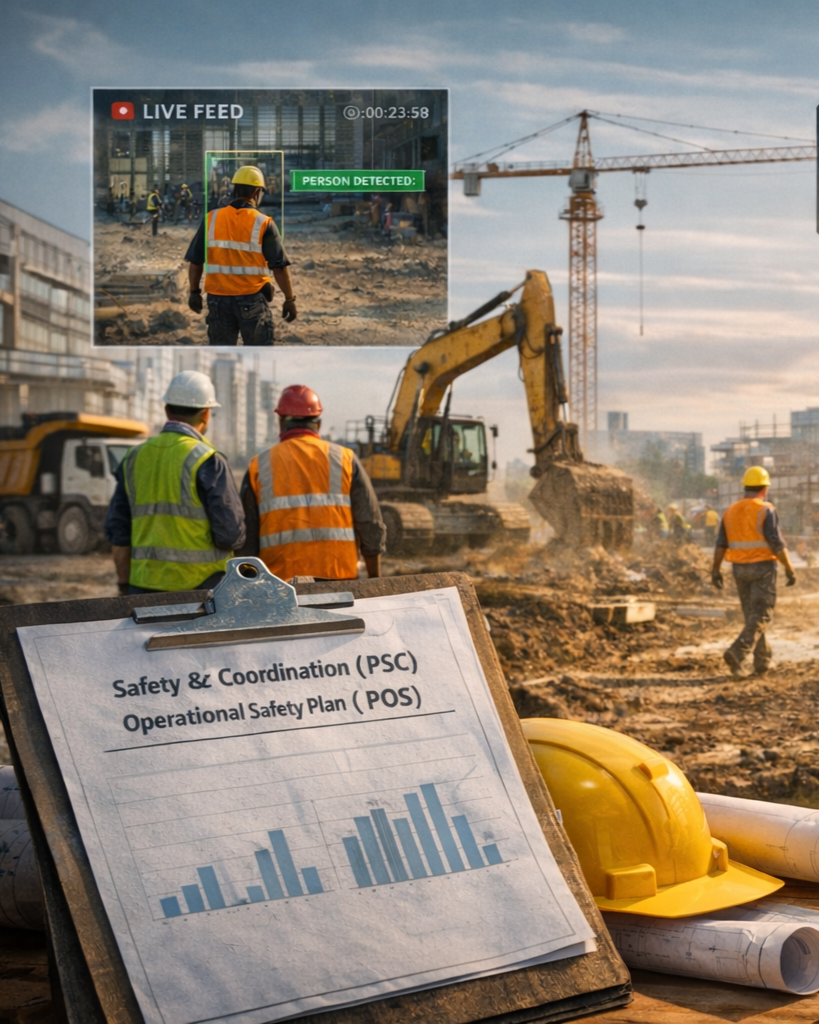
Construction safety needs operational visibility
Construction sites are complex and constantly evolving environments where workers, machinery, and multiple activities operate simultaneously.
Safety is often managed through mandatory documentation such as:
DVR (Risk Assessment Document)
DUVRI (Interference Risk Assessment Document)
PSC (Safety and Coordination Plan)
POS (Operational Safety Plan)
These documents are essential and required by law. However, paperwork alone cannot guarantee real operational safety. Construction sites change continuously. Activities overlap, conditions evolve and workers operate in dynamic environments that cannot always be fully described in procedures.
To truly prevent accidents, companies need:
continuous monitoring of site activities
visibility over operational conditions
tools to detect risks before incidents occur
Real safety requires more than documentation, it requires operational awareness
If risks remain invisible, accidents cannot be prevented
The answer? AI4OS
AI4OS is NCM’s AI-powered platform designed to improve operational safety on construction sites.
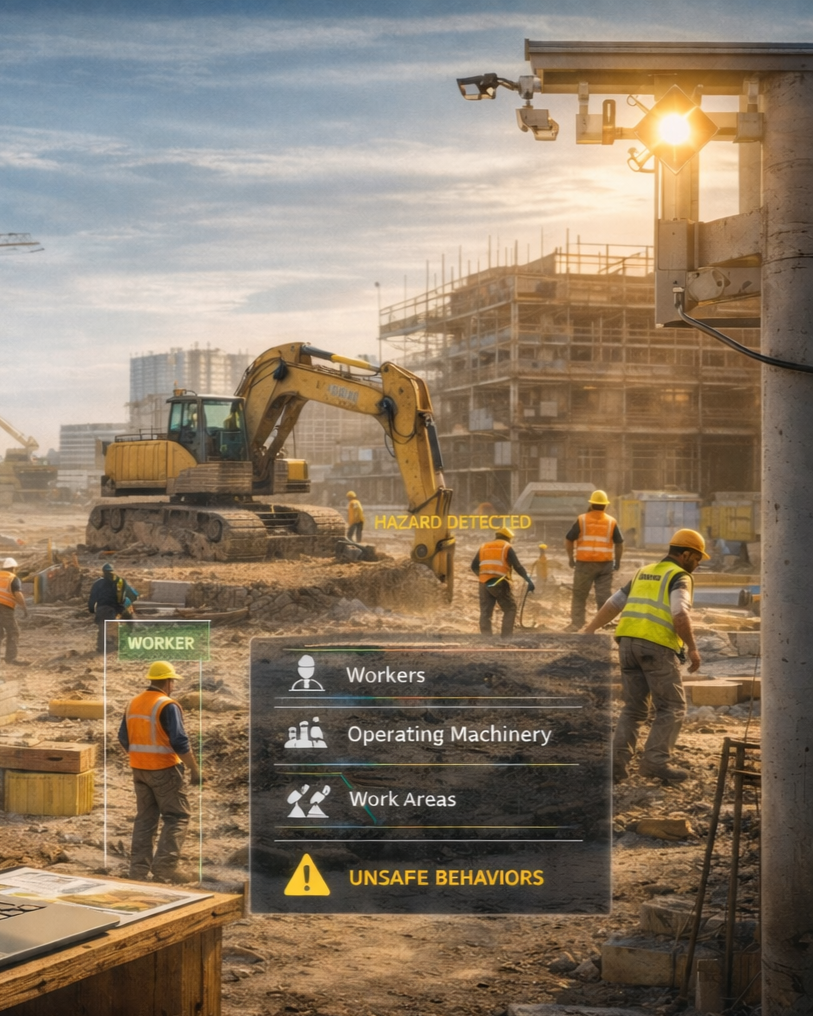
Using computer vision and artificial intelligence, AI4OS analyzes images captured by cameras already installed on site.
The system automatically detects:
workers
operating machinery
work areas
potentially unsafe behaviors
These visual signals are transformed into real-time safety insights, helping safety managers monitor site activities and identify risks earlier.
By turning video streams into operational data, AI4OS brings safety from paperwork into real-world monitoring.
Functionalities
-
Automatic PPE Compliance Monitoring
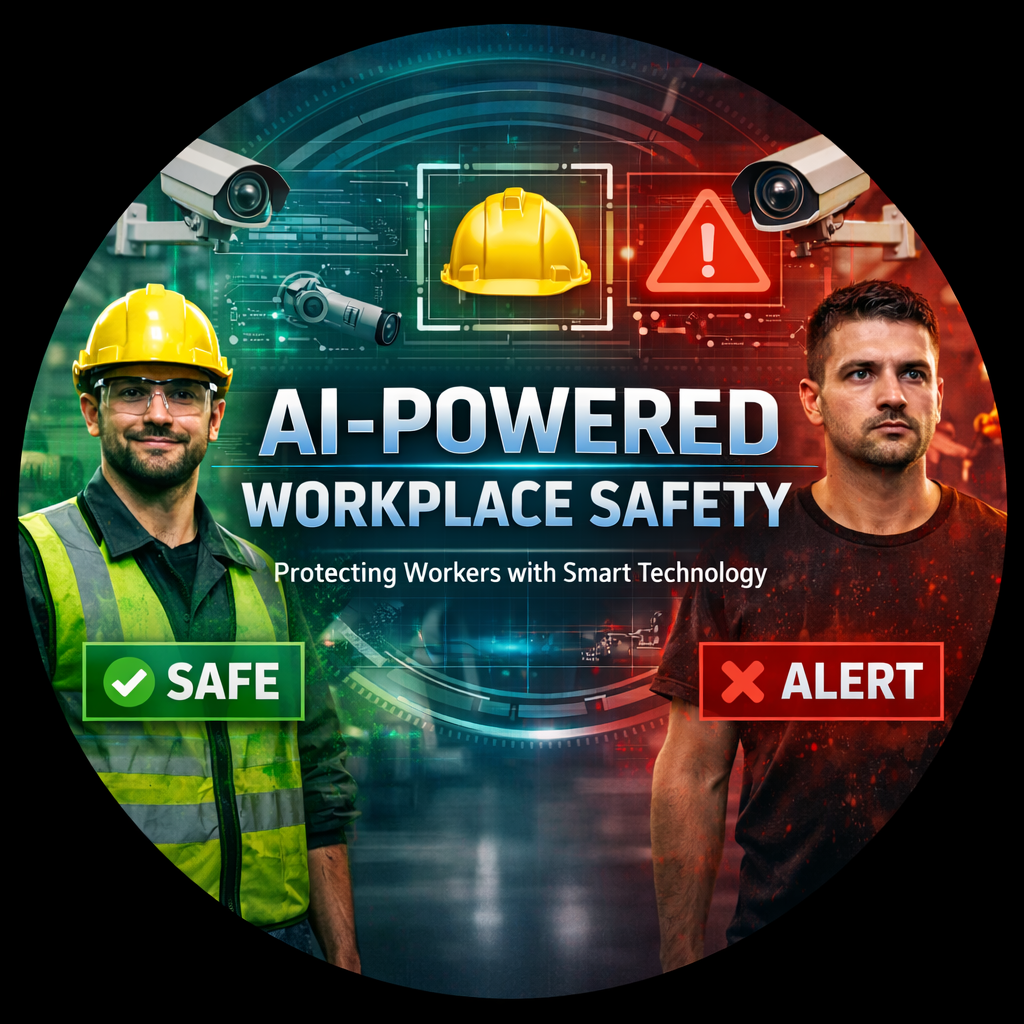
AI4OS permits automatic verification of the correct use of personal protective equipment (PPE).
AI4OS analyzes video streams in real time to detect:
missing safety helmets
absence of high-visibility vests
improperly worn PPE
This helps reduce unsafe behaviors and improve compliance with safety procedures on construction sites.
-
Crane Operation Safety
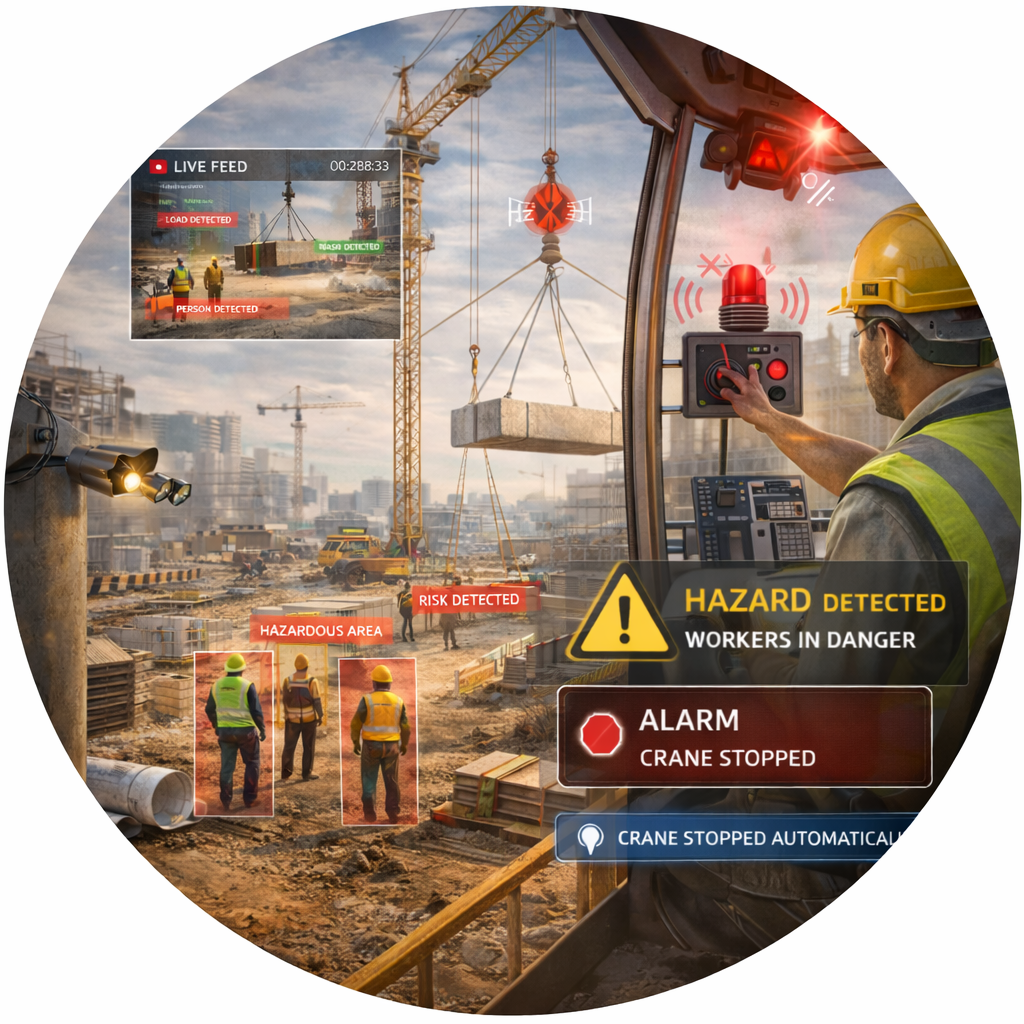
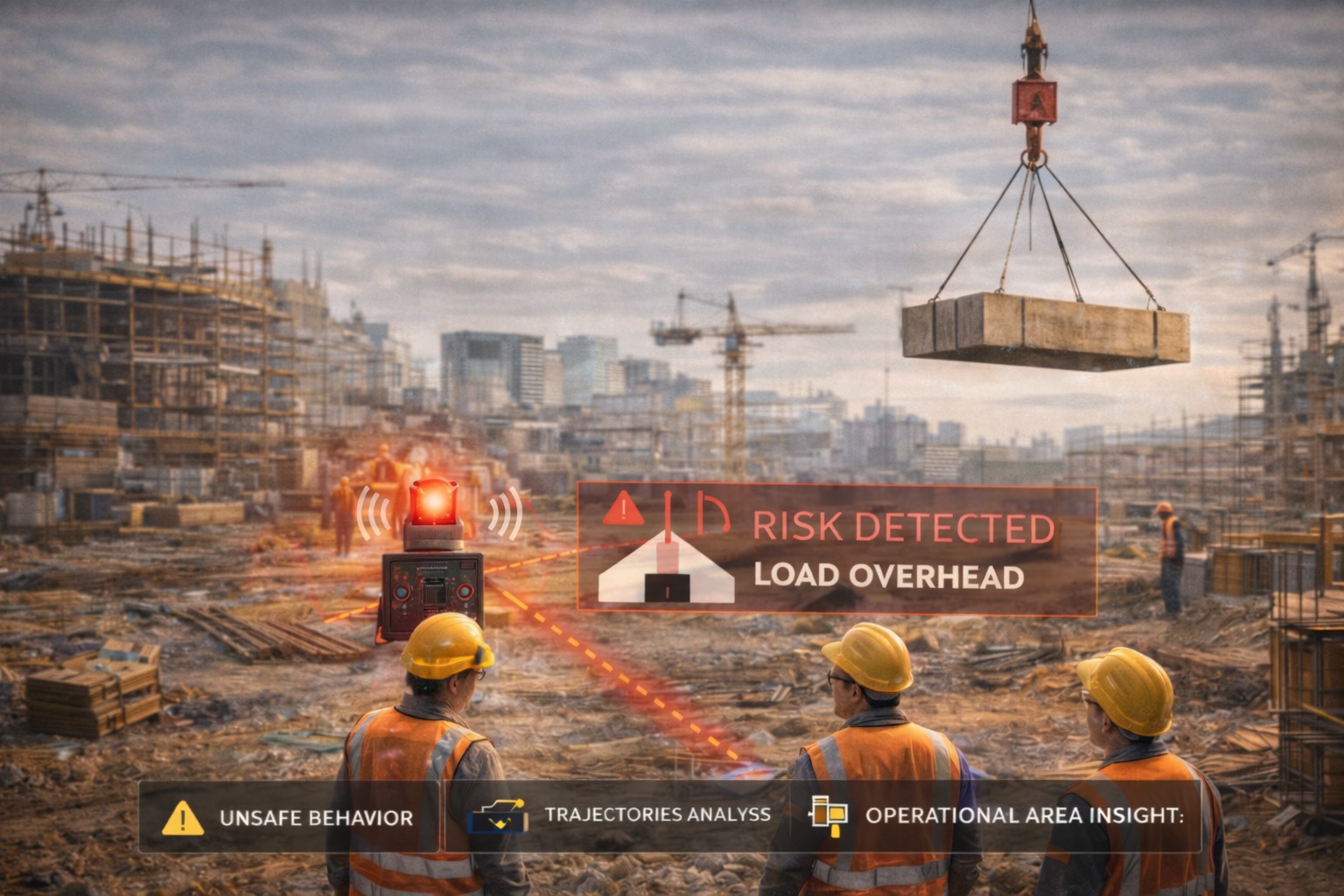
AI4OS monitors suspended load operations to automatically detect risk situations during lifting activities.
The system identifies the presence of workers in hazardous areas and analyzes the position of the load in relation to people on the construction site.
When a risk is detected, AI4OS activates alerts and acoustic alarms for site operators and the crane operator, and can automatically intervene by stopping the crane’s movement, helping prevent accidents during lifting operations.
-
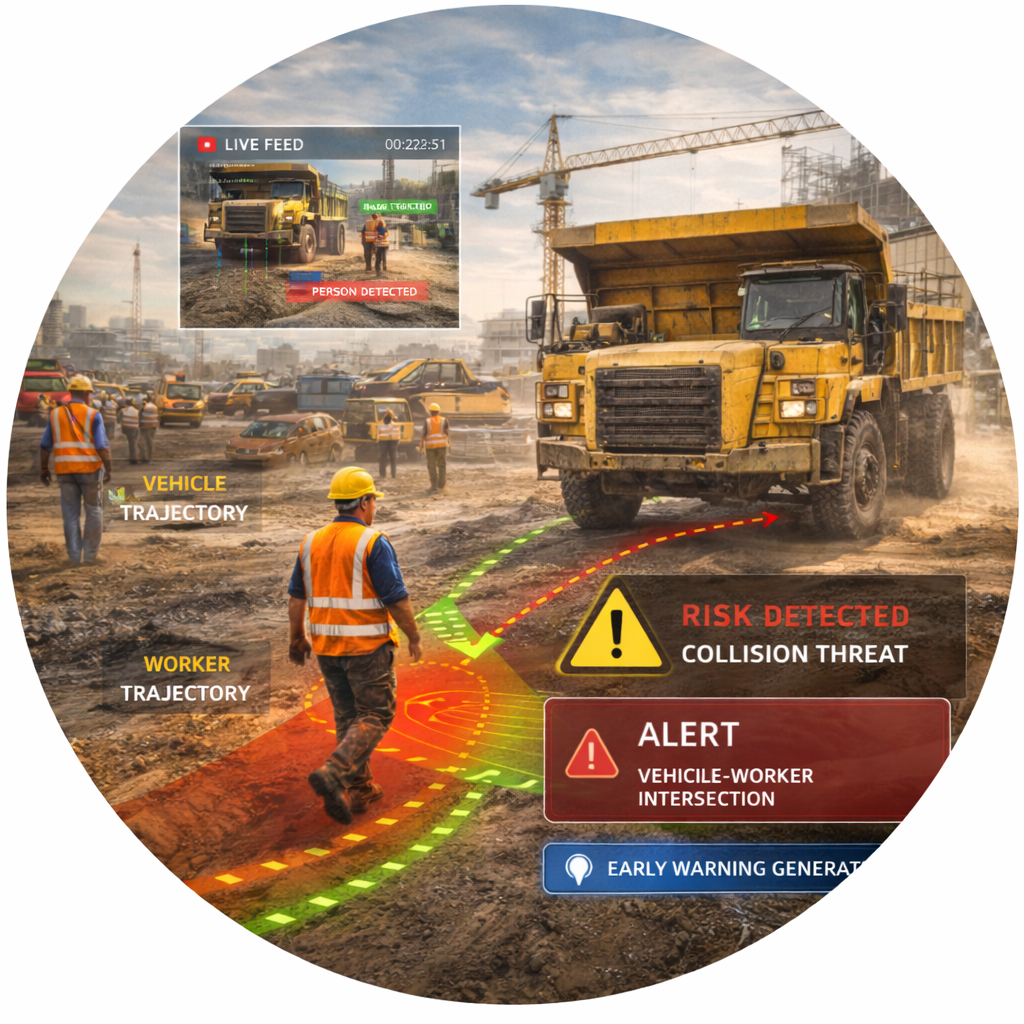
Vehicle–Worker Collision Prevention
AI4OS analyzes interactions between worksite vehicles and workers in operational areas to identify potential collision situations and reduce the risk of worker strikes.
The system continuously monitors the movements of people and vehicles, calculates movement trajectories, and identifies possible intersection points between workers and machinery.
When a risk situation is detected, AI4OS generates alerts and early warnings, enabling timely intervention before an accident occurs.
-
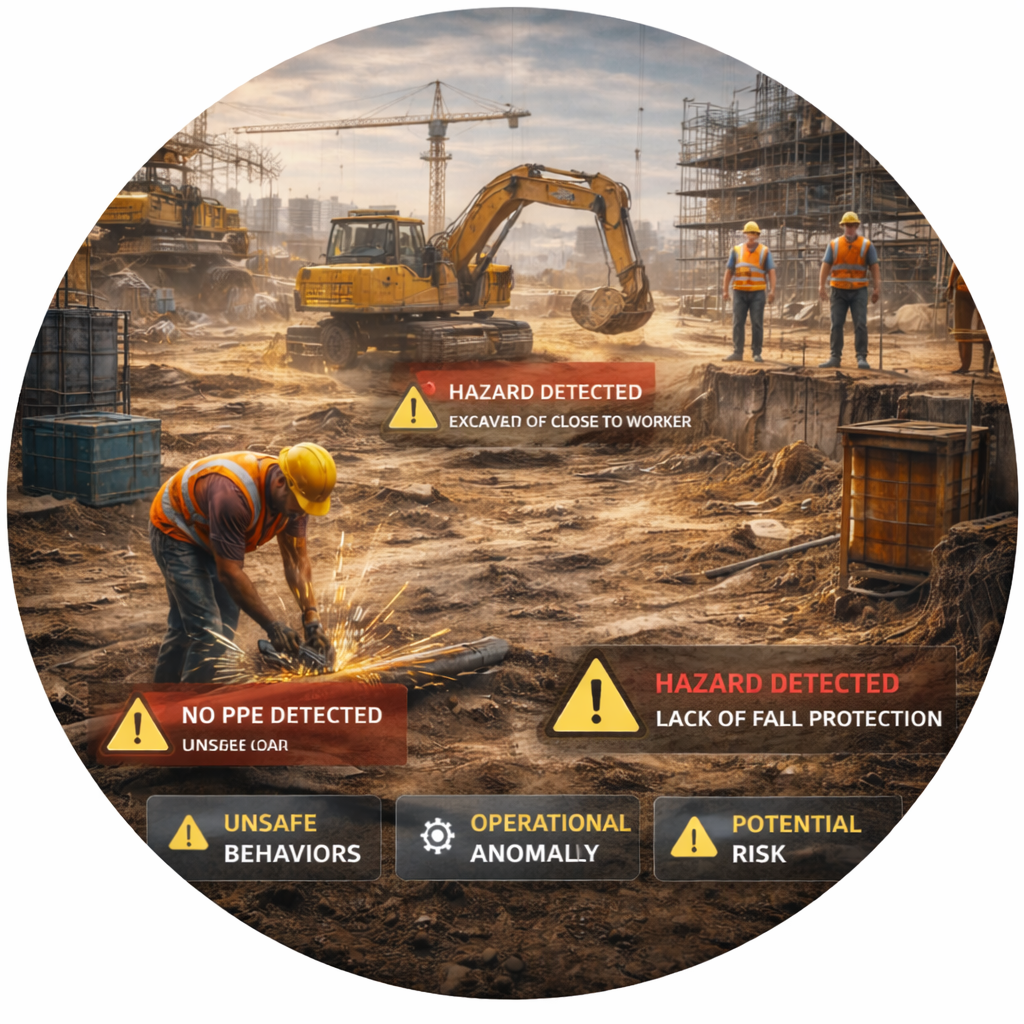
Automatic monitoring of safety conditions
AI4OS continuously analyzes images captured by site cameras to identify:
unsafe behaviors
operational anomalies
potential risk situations
This enables better control of on-site activities and supports safety management even in complex construction environments.
How it works?
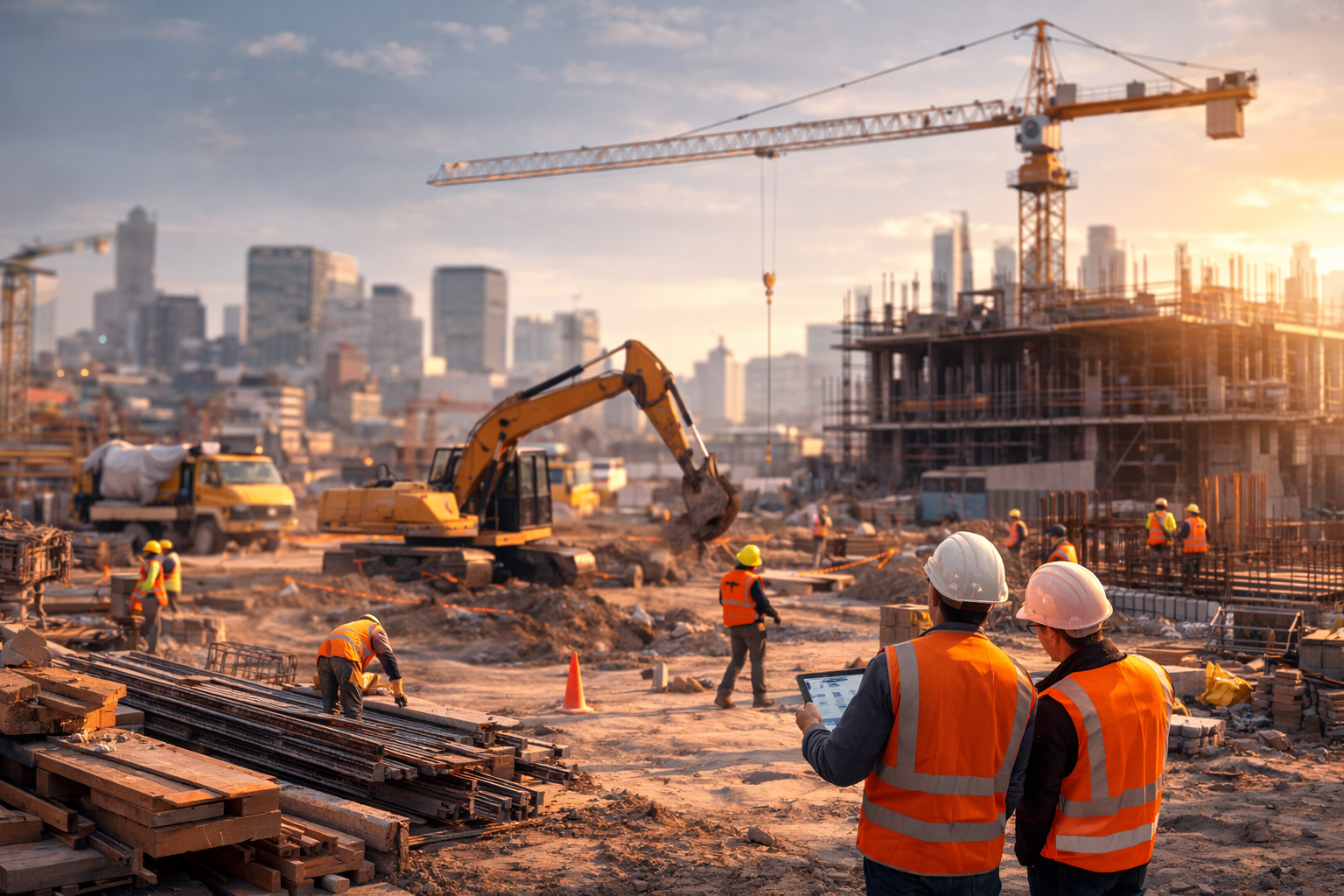
Step 1
Image Acquisition
Camera capture real-time video streams of the operational areas.
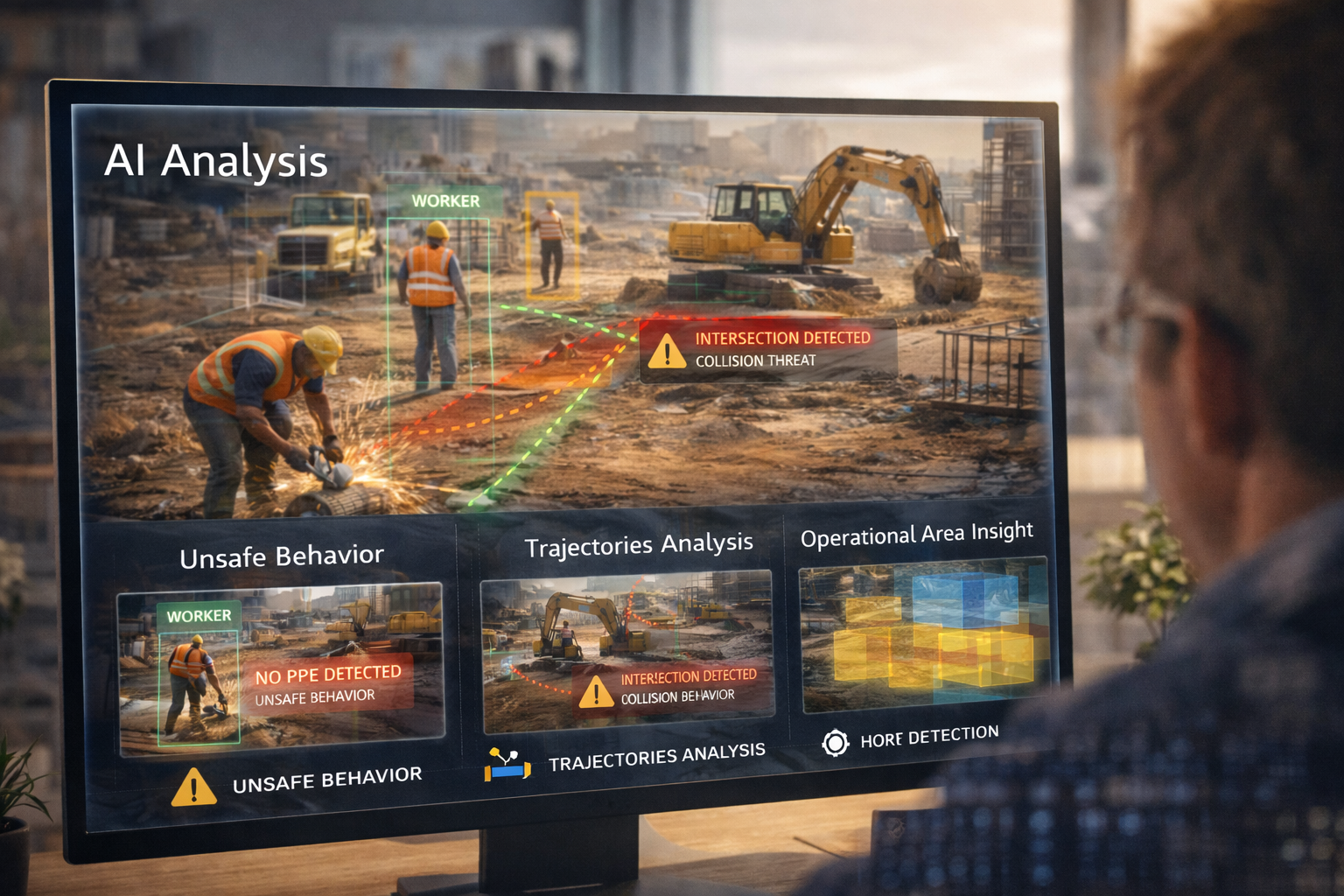
Step 2
Automated Analysis
The video streams are processed using Computer Vision algorithms and Artificial Intelligence models that analyze the construction site scene, characterized by continuously evolving activities
Step 3
Information Extraction and Alert Generation
The system processes the images to generate data and information useful for monitoring operational and safety conditions.
When potentially critical or non-compliant situations are detected, the system generates alerts to workers in a potential dangerous area.
FAQ-Privacy, Compliance and Security
-
Yes. AI4OS is designed to operate in compliance with major European regulations, with particular attention to data protection, responsible use of artificial intelligence, and workplace safety.
The platform is developed by NCM following principles of transparency, responsibility, and regulatory compliance.
-
AI4OS is designed according to the principles of the GDPR (EU Regulation 2016/679).
The system automatically analyzes images from security cameras to identify potential risk situations, not to monitor individual workers.
Implementations may include measures such as:
data minimization
privacy by design and privacy by default
controlled access to data
anonymization or pseudonymization of data when appropriate
Operational deployment of the system must always comply with company procedures and applicable data protection regulations.
-
AI4OS is developed according to the principles of the European Artificial Intelligence Act (AI Act).
The platform uses computer vision algorithms to analyze images and improve operational safety.
System development follows key principles such as:
transparency in the use of AI
risk management and mitigation
human oversight of operational decisions
-
AI4OS is designed to support companies in preventing accidents and improving operational oversight.
The system can integrate with the main safety management tools required by Italian workplace safety regulations, including:
DVR – Risk Assessment Document
DUVRI – Interference Risk Assessment Document
PSC – Safety and Coordination Plan
POS – Operational Safety Plan
AI4OS does not replace these safety documents, but can help verify that operations are carried out under the expected safety conditions.
-
Yes. AI4OS is designed to integrate with existing CCTV infrastructure.
The platform can analyze video streams from compatible security cameras, allowing companies to leverage their current surveillance systems without the need for major hardware changes.
This approach enables faster deployment while reducing implementation costs and operational disruption.